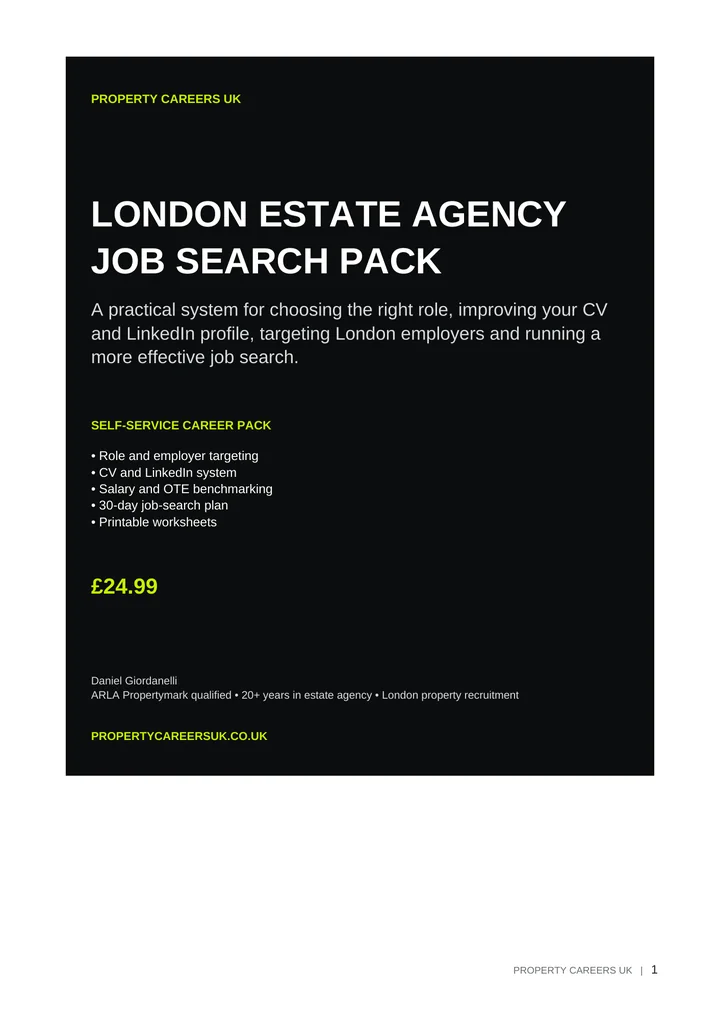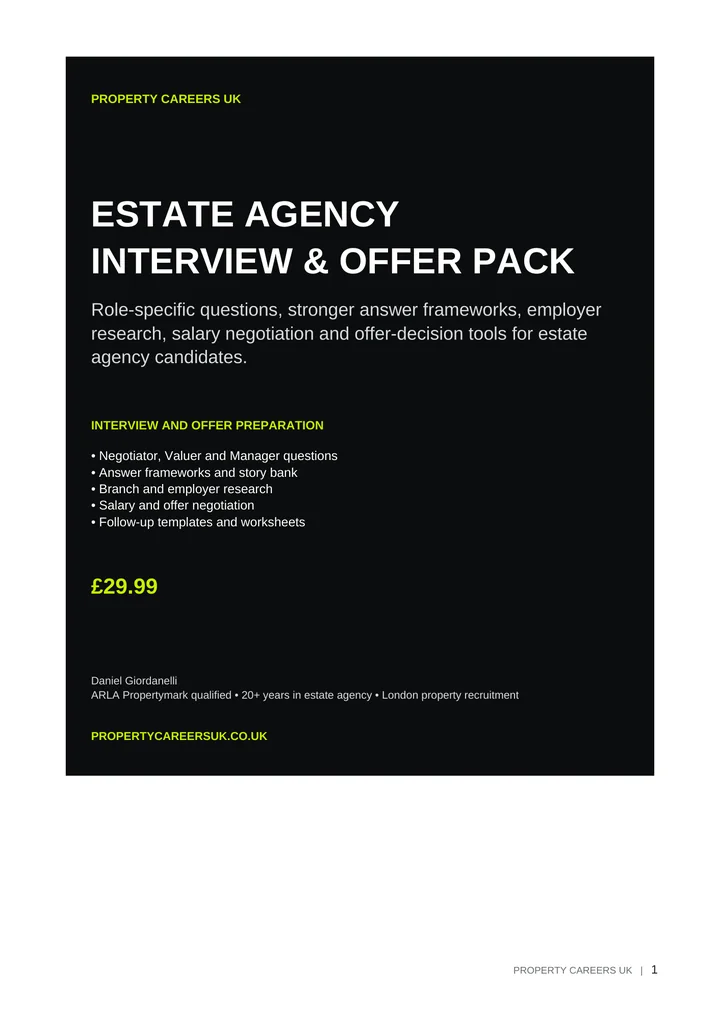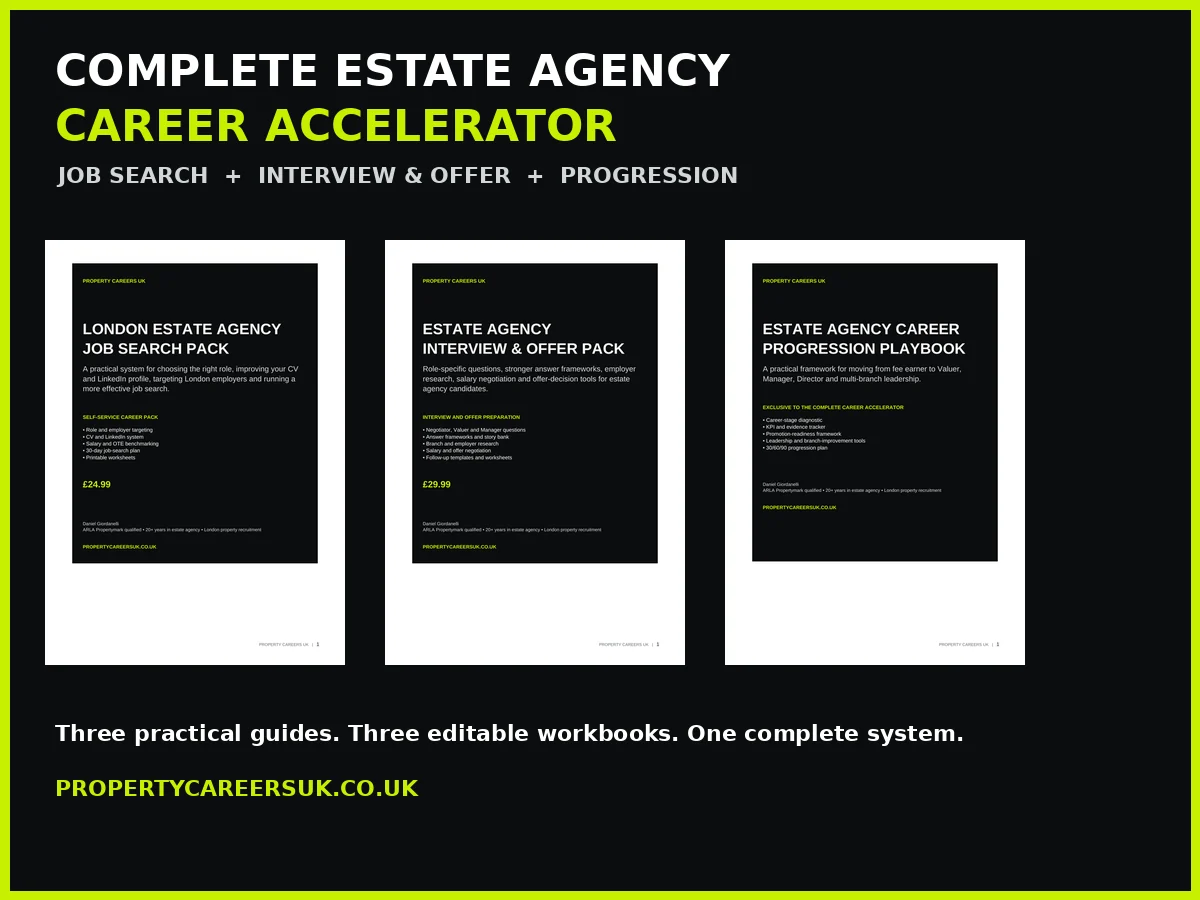

Choose a topic below. Tap to open the advice you need.
Before you start
Breaking into estate agency in London can feel difficult when every job advert seems to ask for experience. In practice, trainee and junior opportunities do exist. Employers are often looking for evidence that you can communicate confidently, work towards targets, build rapport quickly and stay resilient in a fast-moving environment.
If you are entering the industry, preparation matters. You need to understand which London estate agency roles suit your background, how to translate transferable experience into language an employer values, and how to explain convincingly why you want to work in property.
Can you become an estate agent without experience?
Yes. A common entry route is to start in a trainee or junior sales or lettings position and learn the role on the job. Previous experience in property can help, but it is not the only thing employers assess.
Experience from other customer-facing or target-driven sectors can be relevant, including:
- recruitment
- hospitality
- retail
- car sales
- telesales
- fitness or membership sales
- customer service
- other target-driven sales roles
What London estate agencies actually look for
For an entry-level candidate, employers are often assessing attitude and commercial potential as much as direct property experience. You need to give evidence of the qualities that matter in a busy branch environment.
- Commercial drive: can you work towards targets and stay motivated by results?
- Communication: are you comfortable speaking to new people and building rapport quickly?
- Resilience: can you deal with rejection and keep going?
- Customer service: can you manage clients professionally?
- Confidence: are you comfortable on the telephone and face-to-face?
- Local knowledge: do you understand the London area in which you are applying?
- Motivation: can you explain why estate agency is the career you actually want?
Sales or lettings: where should you start?
Do not search only for “estate agent jobs”. Entry-level London opportunities can appear under several different job titles. Depending on your background, useful searches can include:
- Trainee Sales Negotiator
- Trainee Lettings Negotiator
- Junior Negotiator
- Lettings Assistant
- Property Administrator
- Property Sourcer
Sales and lettings can both provide strong long-term career routes. The best first role depends on your personality, commercial strengths, preferred working style and the quality of the manager and branch you will be learning from.
Do not automatically choose the role with the biggest OTE
Headline earnings matter, but they are only one part of a first job. Before accepting a trainee role, look at the full opportunity:
- basic salary
- how commission actually works
- whether there is an initial guarantee
- quality of training
- branch performance
- opportunity for progression
- location and commute
- sales versus lettings
- corporate versus independent agency
- the manager you will actually be learning from
Do you need a driving licence?
A driving licence is useful for many traditional negotiator roles because viewings, valuations and appointments can take place across a wide patch. Requirements vary by employer and branch, so read each job specification carefully rather than assuming every London role is identical.
Your CV needs to sell transferable experience
If you have never worked in property, do not hide that. Instead, make it obvious why your previous experience is relevant to estate agency.
For example, instead of writing:
You might position the same experience more commercially:
The facts have not changed. The second version simply helps a recruiter understand how the experience could transfer into a sales or lettings environment.
London knowledge can give you an advantage
London is not one single property market. A role in Chelsea can involve a very different customer profile, stock and price point from a role in Clapham, Canary Wharf, Streatham or East London.
Before an interview, understand:
- the agency's branch network
- the area the branch covers
- the type of properties the office handles
- whether the branch is mainly sales, lettings or both
- the main local competitors
- why you specifically want to work in that London market
Walking into an interview knowing the patch demonstrates far more intent than simply saying that you have “always been interested in property”.
How to improve your chances of getting your first interview
Treat your job search like a sales process. Target the right roles, make your CV commercially relevant and prepare a clear explanation of why you are moving into estate agency.
- Apply for roles that genuinely fit your level.
- Tailor your CV rather than sending the same version everywhere.
- Research each agency and branch before speaking to them.
- Be ready to explain your transferable skills with specific examples.
- Prepare for common sales, customer-service and motivation questions.
- Follow up professionally after applications and interviews.
Trying to break into London estate agency?
Getting your first opportunity is often about positioning yourself correctly — knowing which roles to target, how to present your transferable experience and what London estate agency employers are actually looking for.
I work within property recruitment and can give you practical, one-to-one guidance based on your experience, your location and the type of London estate agency career you are trying to build.
What can you actually earn in London estate agency?
See current London salary benchmarks, how basic pay differs from OTE, and what changes as you move from trainee negotiator into senior and management roles.